Antalya
Places to visit in Antalya
The easiest way to hold Antalya in your head is to split it into three directions: the centre (Kaleiçi and around it), the west (Konyaaltı, the museum, mountains) and the east (Lara, the airport, the ancient cities). Lower Düden is on the eastern side, Upper Düden inland. The list below follows that triangle.
Twelve places, and where each one sits
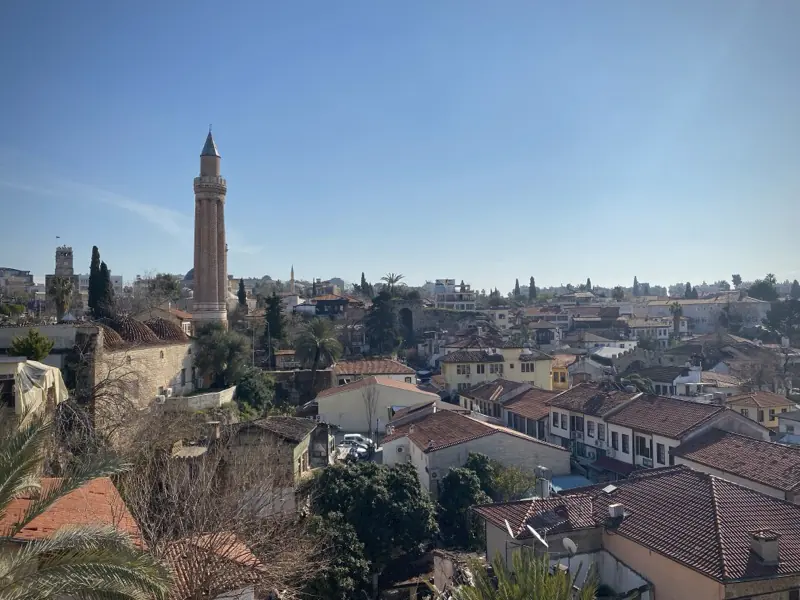
Kaleiçi
Antalya’s old town. Narrow stone streets, Ottoman houses and a marina inside the walls. It is walkable and the easiest part of the city to orient yourself in, which makes it a natural stop on the way back from Düden.
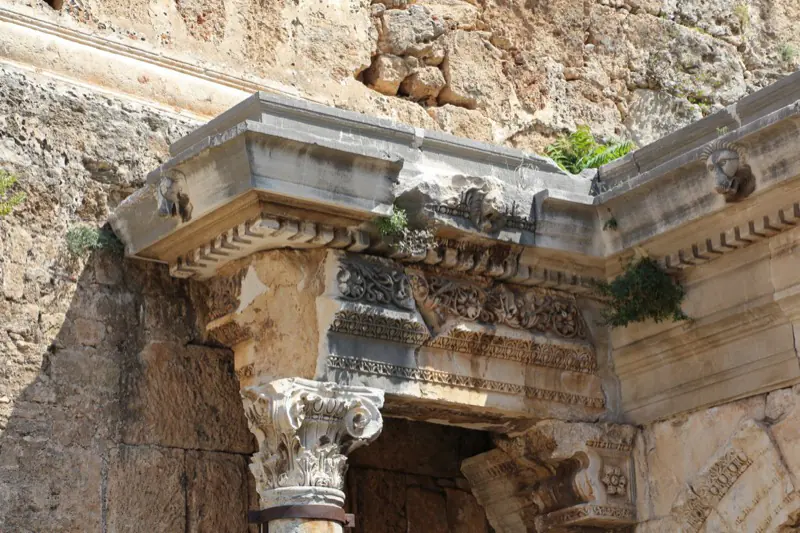
Hadrian’s Gate
A three-arched marble gate built in the 2nd century AD for the emperor Hadrian’s visit. It is one of the entrances to Kaleiçi, so you will probably walk through it whether you plan to or not.
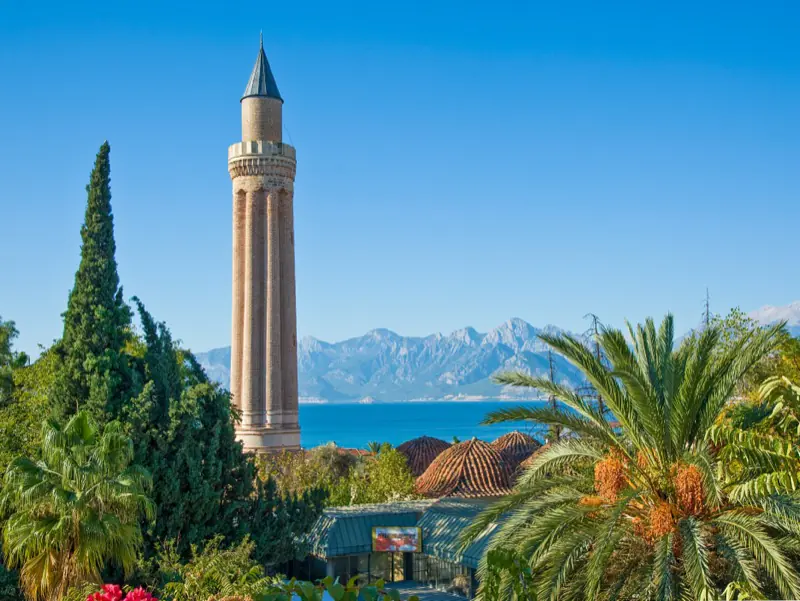
Yivli Minaret
A Seljuk-era minaret whose fluted shaft has become the outline people picture when they think of Antalya.
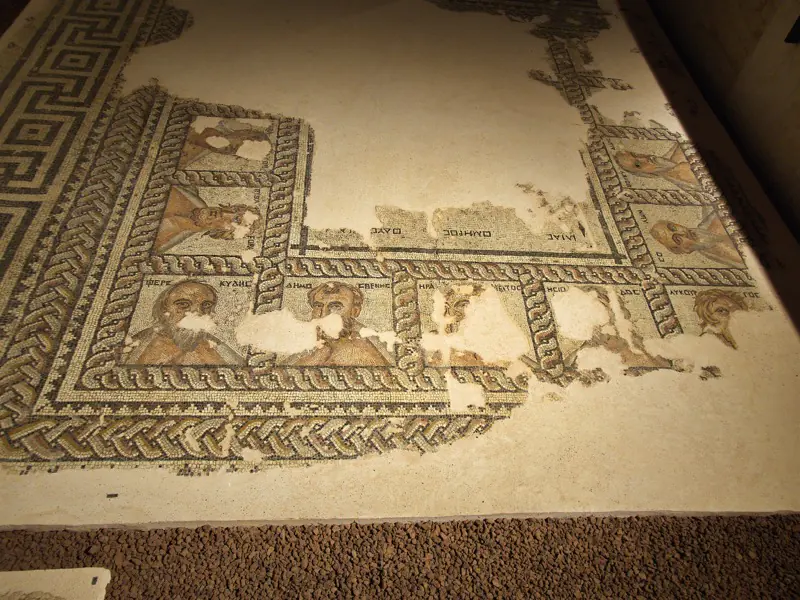
Antalya Museum
Where the sculpture and finds from the region’s ancient cities ended up. Going here before Perge or Aspendos makes the ruins legible rather than merely old.
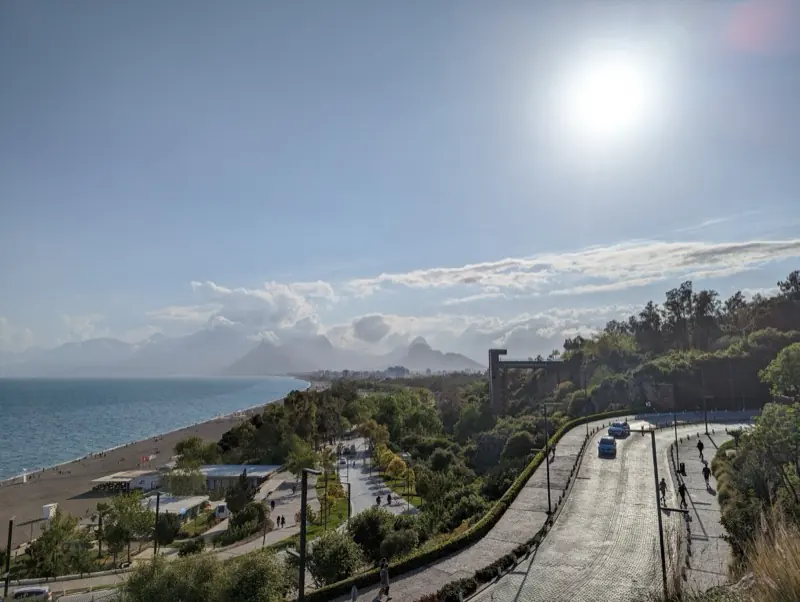
Konyaaltı Beach
A pebble beach running along the foot of the Beydağları. Mountains behind, sea in front. Nothing like the sandy coast on the Lara side.
Lara Beach
The sandy coast east of the city. It lies in the same direction as the cliffs at Lower Düden, so the two fit comfortably into one day.
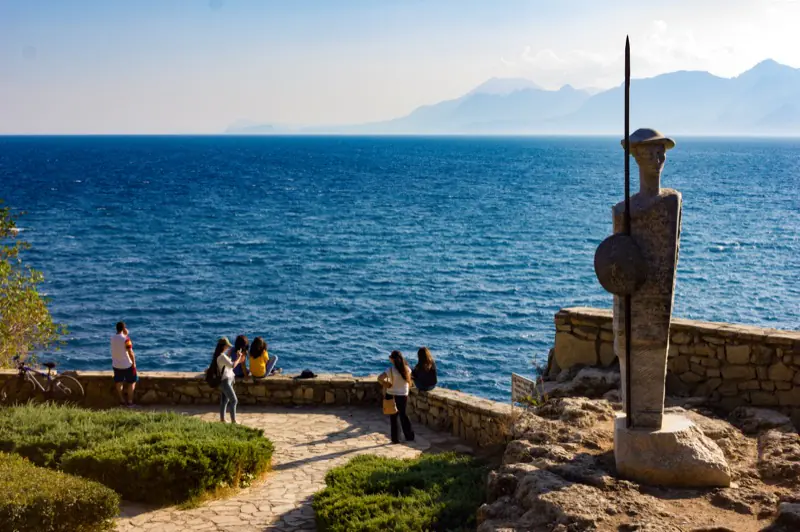
Karaalioğlu Park
The cliff-top park next to Kaleiçi, with terraces looking over the bay to the mountains opposite. It fills up at sunset.
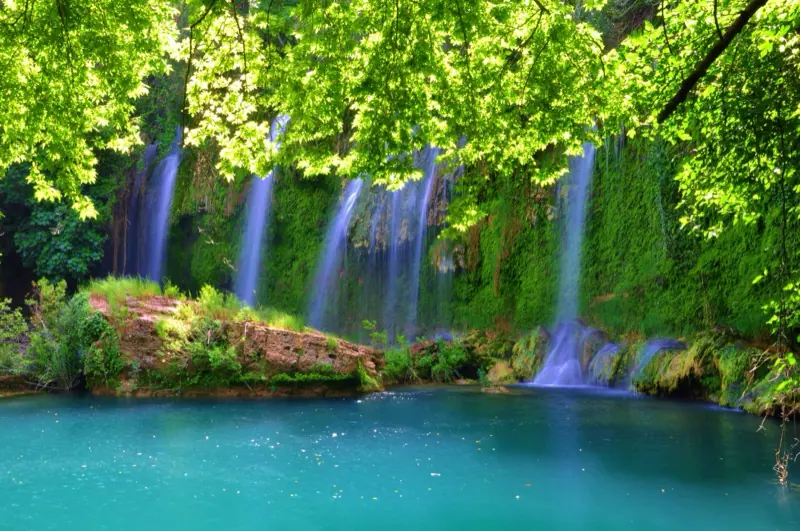
Kurşunlu Waterfall
Antalya’s other known waterfall. What differs from Düden is not scale but temperament: quieter water stepping down through pools inside a canyon. Good if you want a walk rather than a viewpoint.
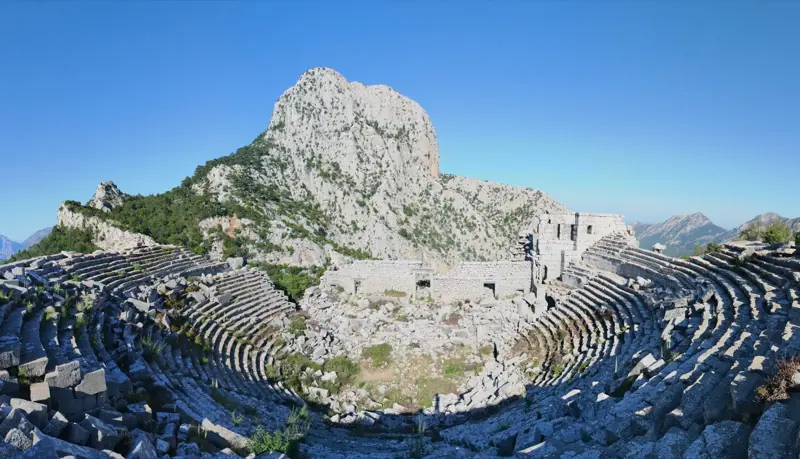
Termessos
An ancient city left on a mountain top inside forest. It asks for an uphill walk, but the view from its theatre is among the most striking things in the province. Wear proper shoes.
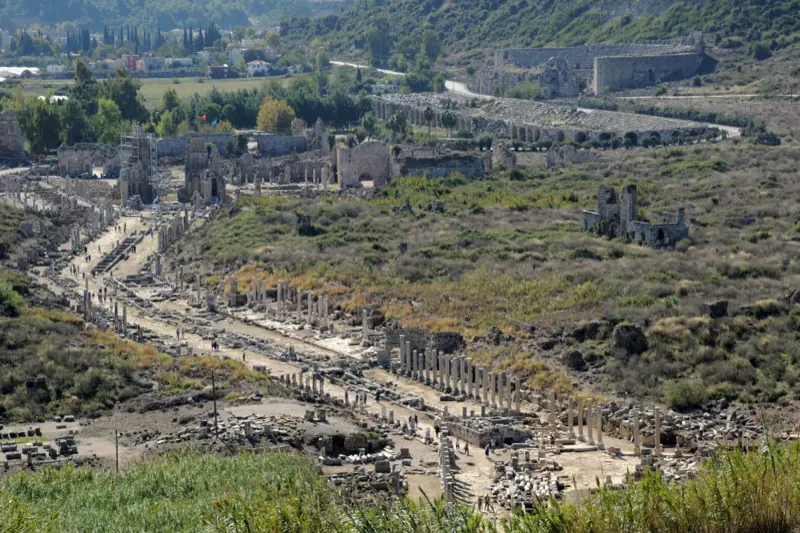
Perge
A large ancient city with its colonnaded street, baths and stadium still standing. It is on the same side of the city as the airport and Lara.
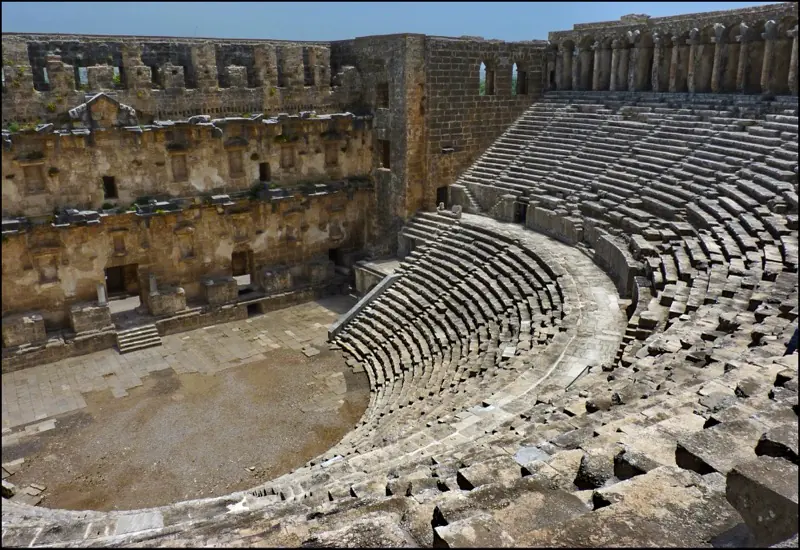
Aspendos
Its Roman theatre counts among the best preserved anywhere. The stage building is close to intact, which is rare enough to be worth the drive.
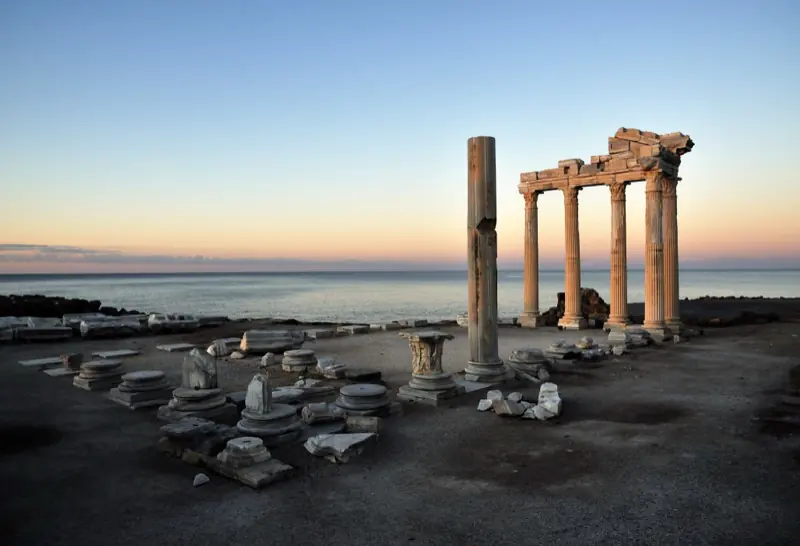
Side
A town on a headland, tangled up with ancient ruins. The columns of the Temple of Apollo stand right above the water.
Where does Düden fit in this list?
Düden is where nature and the city meet with the least distance between them. Termessos or Kurşunlu mean leaving town and setting aside hours for the road. At Düden you are barely out of the centre before you are standing in front of a waterfall going off a cliff into the sea.
For most visitors that makes Düden a stop inside another plan rather than a day of its own. Upper Düden in the morning, Kaleiçi in the afternoon, Lower Düden in the late light is an easy day to build.
Frequently asked questions
What is the one place to see in Antalya?
If it has to be one, Kaleiçi. The city’s history, its harbour and its street life are gathered there and it is walkable. For nature, the Düden Waterfalls are the closest and easiest thing to reach from the centre.
How many days do I need for central Antalya?
Two full days give you a comfortable frame: one for Kaleiçi and the museum, one for the Düden Waterfalls and the coast. Adding Aspendos, Side and Termessos takes it to three or four.
Why are there no prices or opening hours here?
Museum and archaeological site fees and hours change from season to season. A wrong figure leaves you standing at a closed gate, so we do not publish them unverified. Confirm with the site itself before you go.
How do you string these into a day?
Knowing the places is not enough; the order is what saves the day. The routes page has ready-made days built around Düden.
