Lara direction · Antalya
Lower Düden Waterfall
Off the cliffs into the sea.
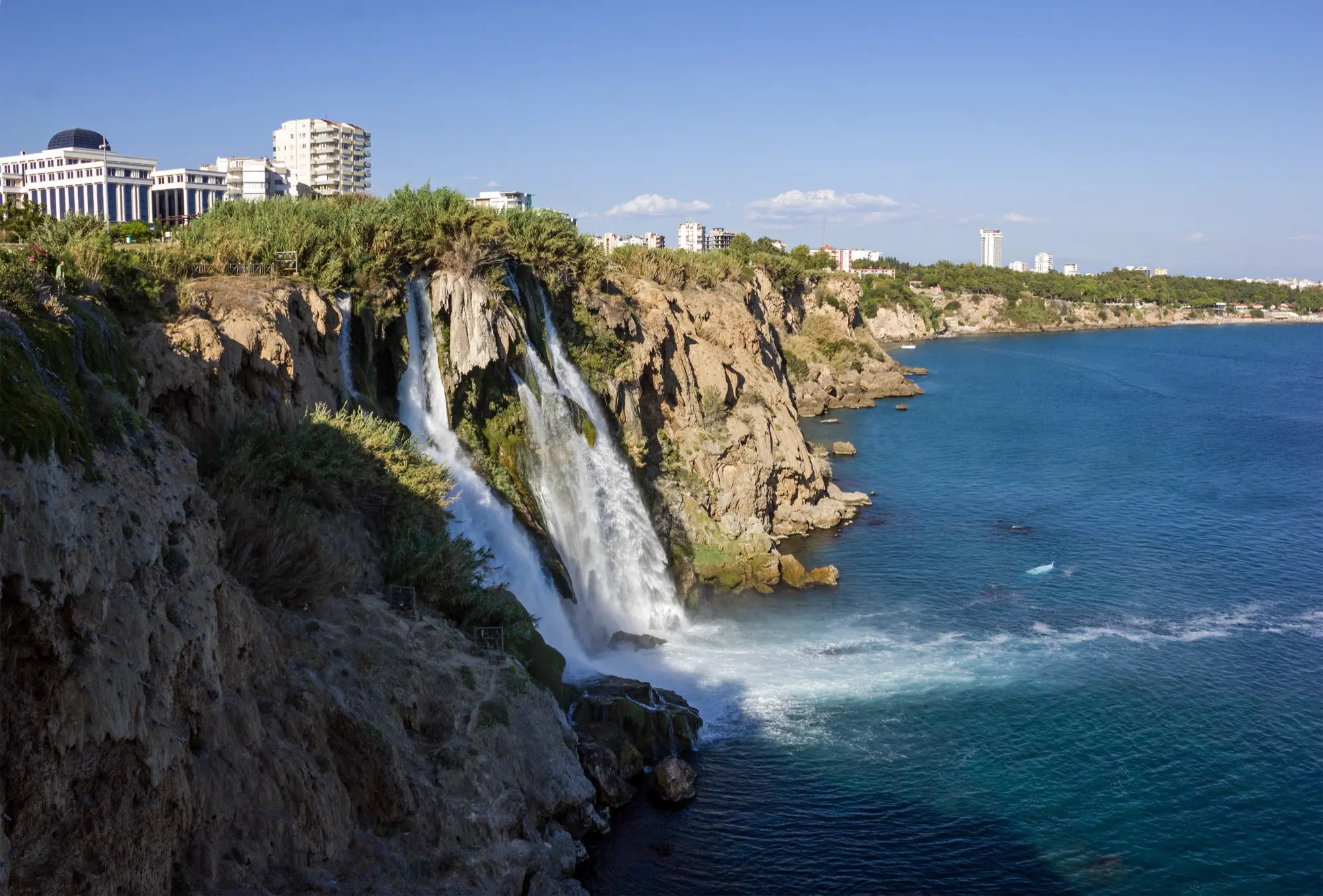
Lower Düden is the arm of the Düden river that reaches the sea. Here the water goes over roughly forty metre limestone cliffs directly into the Mediterranean. The photograph that made Antalya recognisable, city on one side and open water on the other, comes from here.
- Location
- East of central Antalya
- Also called
- Karpuzkaldıran Waterfall
- Drop
- Roughly 40 metres
- Known for
- Falling straight into the sea
What makes it different
Most waterfalls end somewhere inland. This one ends at the coastline. The Düden river crosses the eastern edge of the city, reaches the cliff line and goes over it, so fresh water meets salt water in a single drop.
Today’s visitor is not the first to write this drop down. In antiquity the river was the Katarrhaktes, and Strabo noted that the noise carried a long way; the history of the waterfall has its own page.
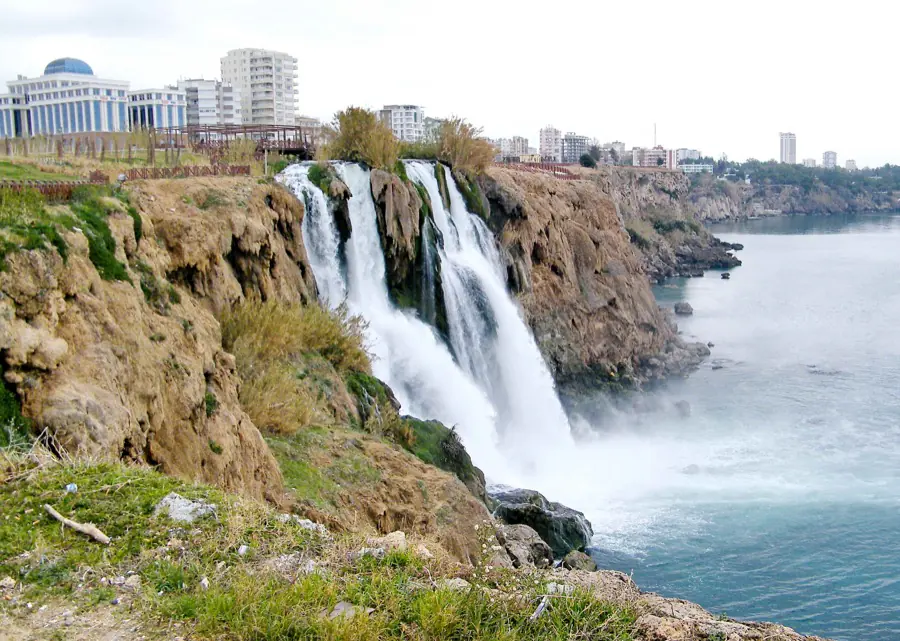
The cliffs are limestone, cut back over a long time by the same water that now falls from them. Behind the falls the city continues, which is why so many photographs of Lower Düden have buildings in the frame.
Where you watch from
There is no walk down to the base. Viewing is done from terraces on top of the cliff, with the water breaking into the sea below you. Lower Düden is a waterfall you look at from across, not one you go into.
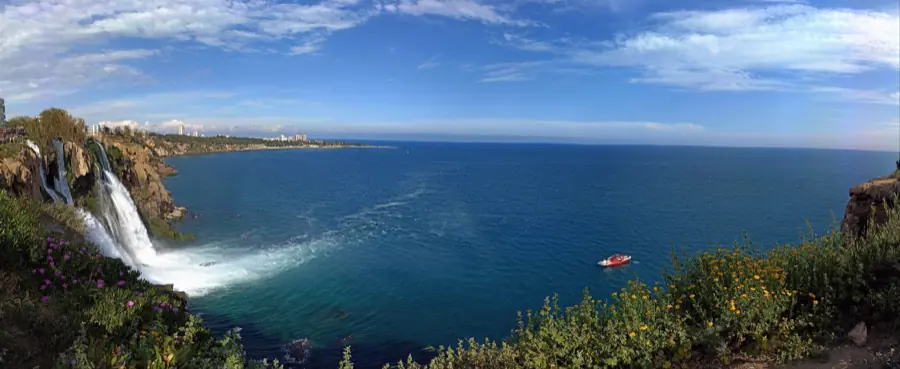
Boat trips along this stretch of coast give you the head-on view from sea level, which is a genuinely different photograph rather than a shortcut to the same one. That is a separate outing, not a way of getting there.
Looking at it from the sea
The face of the waterfall, seen head-on and from below, is only visible from the water. Boats working this route leave from the old harbour below Kaleiçi and from the marina there, run east along the Lara coast and turn in front of the falls.
What you get is a different picture, not a better one. From the cliff you see the fall against the sea and the city; from the water you see its full height with the rock behind it. Spray reaches the boat, so plan for the camera.
Departure times, durations and prices vary by operator and season, and we do not print them here. Check them with the operator on the day.
Light and season
Late afternoon is the reliable answer. The cliffs face open water and midday light is hard, so the sea reads flat. As the sun drops the water and the rock separate and the colour comes back.
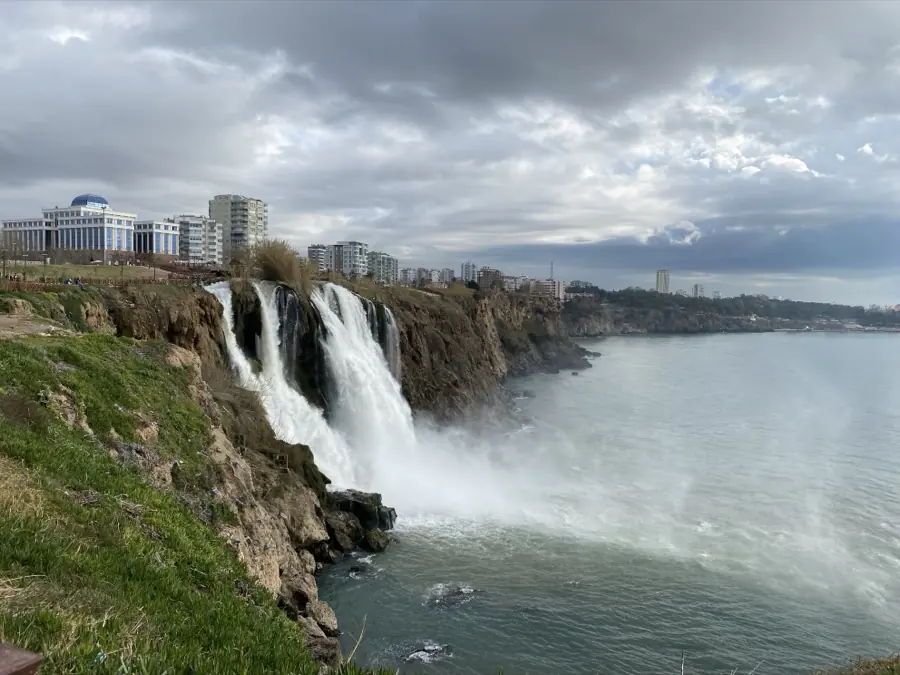
Overcast days are not a loss here. Grey sea behind white water is a strong combination and the crowds are thinner.
Flow follows the season, as it does upstream. Spring gives the heaviest curtain. By late summer it narrows.
Lower or Upper?
Come here for the wide view: sea, cliffs and the city skyline in the same frame. Go to Upper Düden for shade, a walk and the passage behind the water. Both sit close enough to central Antalya to fit into one day.
Photographs
Frequently asked questions
Does the water really fall straight into the sea?
Yes, and that is what makes Lower Düden unusual. The river does not end in a pool or another stream. It goes over roughly forty metre limestone cliffs directly into the Mediterranean.
Can I get down to the bottom of the falls?
Not on foot. There is no land route down the cliff face. You watch from the terraces above, with the water breaking into the sea below you. The head-on view from sea level is only available from a boat.
When is the light best?
Late afternoon. The cliffs face open water, so midday sun is hard and flat. As the light softens the colour of the sea comes through and the white water separates from the rock.
Is it far from the city centre?
No. Lower Düden sits on the coast just east of central Antalya, towards Lara, and it is closer to the airport than Upper Düden is. You do not feel like you have left the city.
